Example Diets Beef Cattle Virginia Extension
In the Southeastern U.S., beefiness cattle producers focus on provender management and maximizing the grazing season. To that end, Southeastern cattle spend the vast majority of their lives either grazing or consuming stored forage. Cereal grains and coproduct feeds are also unremarkably used nutritional supplements for cattle in times of elevated nutrient requirement. Any disease or disorder in the beef herd represents a food bleed and subsequent economic inefficiency. Sudden shifts in dietary limerick equally well as mineral imbalances are the primary causes for most nutritional and metabolic disorders. This publication contains an overview of the mutual nutritional and metabolic disorders that may bear on beefiness herds in the Southeast along with management strategies that tin be used to minimize the effects of these disorders in beef cattle product systems.
BLOAT
For most producers, bloat is the near recognizable nutritional disorder. Bloat is a buildup of gas in the rumen, which is the big fermentation chamber that makes up the majority of the foregut in cattle. In its simplest form, gas production from the fermentation of feed particles exceeds the amount of gas lost through eructation or belching. If rumen gases continue to be produced in excess, the rumen distends, producing a "ballooned" look on the animal'southward left side (Figure i). Connected accumulation of ruminal gases will eventually shrink the diaphragm, impede expansion of the lungs, and cause asphyxiation. Producers should spotter for rapid abdominal distention and other signs of discomfort such every bit pes stomping or kicking at the belly.
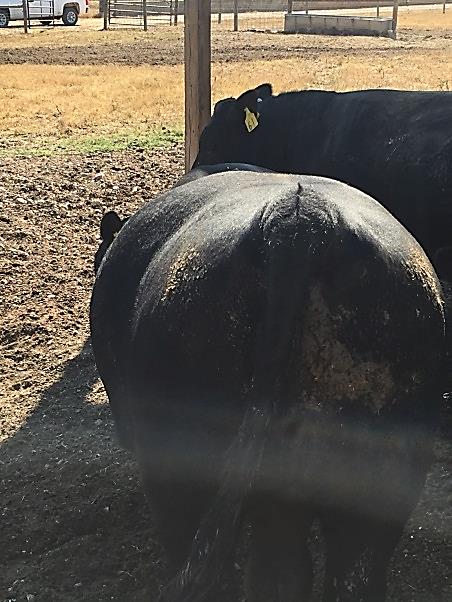
Bloat susceptibility is both animal- and environment-driven. Like humans, some animals have a more sensitive tummy and are more decumbent to bloat. Typically, these animals are diagnosed early and labeled as "chronic bloaters" because they tend to bloat daily. Chronic bloaters are typically marketed early through a auction barn to minimize losses in performance. Environmentally driven bloat can happen because of sudden changes in the diet of fed animals or every bit a outcome of an blow wherein a large amount of feed is spilled in an area where animals volition have access to it, such every bit when creep feeders are damaged (Gadberry and Powell, 2011).
Pasture or legume bloat is as well a possibility. Legume bloat is acquired by high levels of soluble protein in the plant that increases the viscosity of the animal's rumen fluid. This causes fermentative gases tobecome trapped in stable cream equally opposed to a unmarried bubble or loose froth, which is more than typically seen with other types of bloat. Several species of forage crops including alfalfa, ladino or white clover, and Persian clover can crusade legume bloat if cattle are non managed properly (Brawl et al., 2015). Other legume species including (simply not limited to) arrowleaf and berseem clover, crownvetch, sericia and almanac lespedeza, and birdsfoot trefoil contain elevated levels of tannin in the leaves that cause soluble protein to precipitate in the rumen, and thus pose minimal run a risk for legume bloat (Brawl et al., 2015). Additionally, tropical legumes such as perennial peanut, cowpea, and kudzu rarely crusade bloat. Although pasture bloat is primarily associated with the aforementioned legumes, it is important to note that cattle can experience bloat on lush ryegrass or small-scale grains pasture, typically in spring. These plants are high in soluble poly peptide and speedily growing, and so animals that overeat tin be at run a risk.
Prevention:
Preventing bloat is based on management rather than drugs or vaccines. Cattle that accept been undernourished for any length of time should not be turned out onto lush legume pastures or given access to big quantities of supplemental feed. Cattle should be filled upwards on hay then that overconsumption of feeds that may crusade bloat is less probable. Feeding Rumensin® has been shown to reduce the incidence of bloat in grain-based diets, and poloxalene, offered by trade names Therabloat, Bloat Guard, Purina Saf-T-Block, or Sweetlix Bloat Guard, is a chemical compound that has been shown to break up the stable gases that class in the rumen and crusade bloat. Poloxalene can be top-dressed onto supplement at a rate of ii grams per 100 pounds of body weight per head per day. Commercial poloxalene blocks are also bachelor. These are typically salt-molasses blocks that comprise poloxalene at a rate of 30 grams of poloxalene per pound. It is important that cattle be given admission to these blocks for at least three days before allowing them access to lush legume pasture.
Treatment:
A gastroesophageal tube may be used to salve pressure in bloated animals, and a ruminal infusion of poloxalene may be added through the tube to break down the stable gas, allowing the animal to belch. A speculum may exist used to ease passage of the tube through the mouth and forestall the animalbiting and restricting flow of gas or liquid throughthe tube. It is important not to simply drench bloated cattle. Without the protection of the tummy tube, the danger of inhalation is too cracking (Gadberry and Powell, 2011). Animals can suffocate or develop pneumonia due to inhalation of liquid into the lungs.
In the about severe bloat cases, a trocar may exist used to puncture the body and ruminal wall on the animal's left side. This should be reserved as a last resort because of the high adventure of infection. Animal functioning is often decreased by prolonged oxygenation of the rumen environment.
RUMINAL ACIDOSIS Circuitous
As indicated by its name, acidosis is a condition that results from a decrease in ruminal pH and is usually associated with a rapid dietary shift from a high roughage to a high concentrate diet. Acidosis is problem unremarkably discussed in the context of feedlot cattle, but there is a moderate incidence in the Southeast. These cases are most oft observed in cattle that are beingness fed for rapid gain such as may be found in feedlots, operation tests, and 4-H steer or heifer projects. Also, in times of hay shortage, poorly formulated hay replacement rations tin lead to increased incidence of acidosis in the cow herd.

The bacterial population of the rumen is extremely diverse. Some species of bacteria specialize in the fermentation of fiber (structural carbohydrates)and some specialize in the fermentation of starch (storage carbohydrates). All bacteria produce volatile fatty acids as a fermentative by-product. These acids are the basis of energy metabolism in ruminants. If these acids are produced more rapidly than they can be absorbed, they accumulate in the rumen and cause the pH to reject. These conditions are created when cattle are suddenly switched from a slowly fermentable carbohydrate(fiber) to a speedily fermentable sugar (starch).
Additionally, the primary acrid produced from thefermentation of fiber is called acerb acid or acetate. Acetate is a weak acid and allows the ruminal pH to remain more neutral (pH of 6-vii); whereas propionate or propionic acid, which is produced during the fermentation of starch, is a stronger acrid that reduces pH more than rapidly. Equally cattle are shifted from forage to concentrate every bit the primary energy source in the diet, the bacterial population shifts to one that favors rapid fermentation and propionate production and subsequently reduces ruminal pH to a range betwixt v and 6, dependent upon the roughage to concentrate ratio. A pH of 5.6-six.0 poses no real risk to the animal'south wellness and is common in rapidly gaining cattle fed concentrates; yet, if pH continues to fall below 5.v, the subsequent environment is conducive to the growth of leaner, which produce lactic acrid as a byproduct. For this reason, animals with a ruminal pH of 5.2-5.6 are considered to have subacute acidosis. Lactic acid is a strong acid and is non one that cattle tin can use efficiently for productive ends. It is in this acidic (pH < five.ii) environment that symptoms of acute acidosis are probable to be observed. These symptoms volition typically nowadays as cyclical oscillations in eating behavior. Calves with a functional rumen that have been improperly adapted to concentrate will ofttimes binge. Binge eating overloads the rumen with highly fermentable sugar and acts as a primer for the acidic condition. As the pH of the rumen drops, the brute feels sick and goes off feed. When pH rises over again the calf feels better, and because of hunger induced by an extended fourth dimension without feed, then overeats again and the cycle repeats. If this wheel progresses, it can result in higher death loss in the herd. Expiry is ordinarily the result of secondary infections acquired past chronically low ruminal pH.
Animals do non demand to feel acute acidosis to lose productivity. It is commonly thought that subacute acidosis is responsible for greater losses in production than astute-phase acidosis because the disease is harder to notice and therefore non treated.
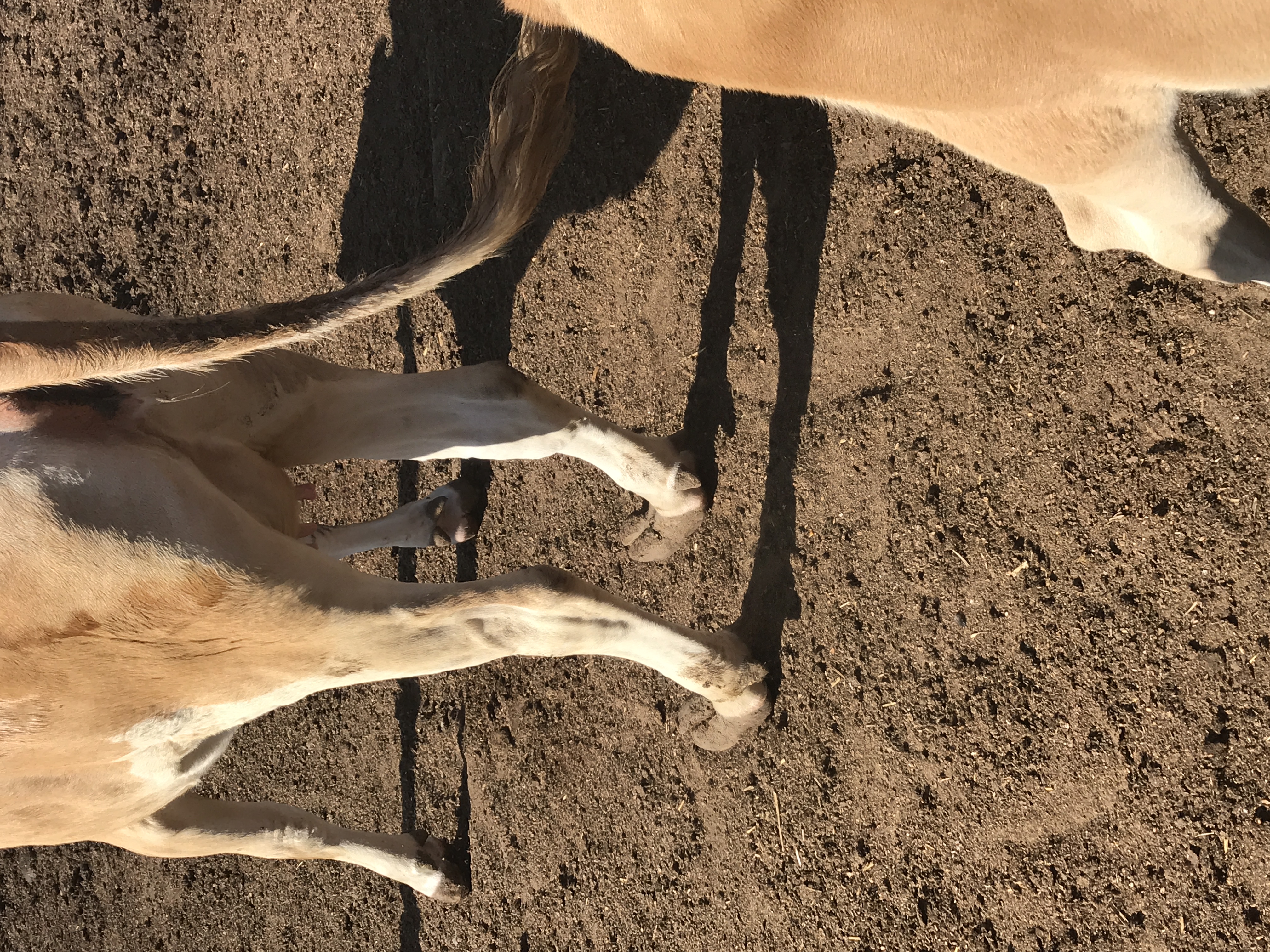
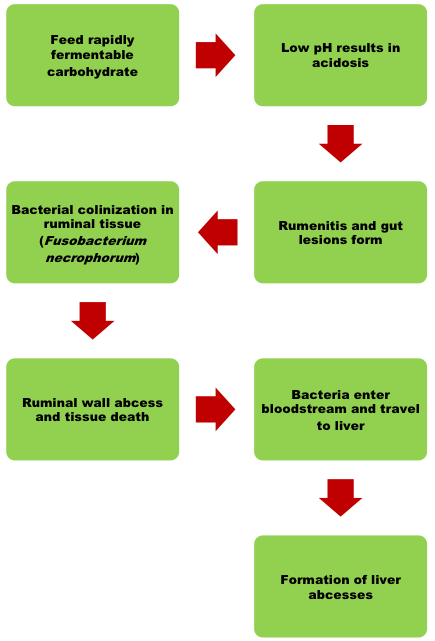
These infections brainstorm in the rumen due to acrid corrosion of the rumen wall. The sores that form will become infected and provide a road of egress for ruminal bacteria into the bloodstream. In some instances, the status tin bear on normal keratogenesis, causing increased force per unit area in the hoof and thickening of the hoof wall. An instance of this status is shown in Figure 3. This condition is often manifested past long toes, and in cases where bacterial endotoxins are released, can issue in a condition known as founder or laminitis.
The blood that leaves the digestive viscera flows directly to the liver so that captivated nutrients can be processed and distributed to body tissues. When leaner are introduced to the bloodstream and allowed to constitute in the liver, then the hepatic tissue besides becomes affected and the germination of liver abscesses brainstorm (Effigy four). Severe liver abscess will result in reduced feed intake, gain,feed efficiency, and carcass yield. This condition is one of the challenges most unremarkably faced past the fed cattle industry because livers that show signs of electric current or previous infection cannot enter the homo food chain. Liver abscesses are the leading crusade of liver condemnations from carcasses in today'south packing plants, accounting for almost i-third of livers that come up through the establish. Livers are currently worth about three dollars to the packer, and while this doesn't represent a massive financial loss, the true cost of liver abscesses are more than accurately measured in the feedlot where the outcome of liver abscess is much costlier. Studies take shown that liver abscesses are responsible for reductions infeed intake and efficiency, gain, finished weight, subcutaneous fat thickness, and can account for a up to a 21-fold increase in carcass trim (Maday, 2018). This means that prevention must be a priority.
Prevention:
As discussed in the previous section, acidosis is often the result of improper acclimation to a high concentrate diet. The problem may be avoided by the conception of a series of transition diets and a longer warm-upwardly period to full feed. Transition diets should contain forty-sixty% roughage to start and the formulation should exist slowly modified over three to four weeks to include less and less roughage. Roughage independent in high concentratediets should not be ground also finely. A relatively large particle size is necessary to supply what nutritionists refer to equally effective Neutral Detergent Fiber (eNDF). More ordinarily known as "scratchfactor," eNDF is the component of fiber that provides concrete stimulation to the ruminal lining, which promotes ruminal contractions and rumination. The textbook definition of eNDF is "whatsoever fiber particle that volition not pass through a1-millimeter screen (Van Soest, 1982). In reality the larger, more than coarse particles brand up the bulk of the solid stage or "raft" of the rumen contents. The more adult the raft, the slower the rate of passage through the rumen becomes, and the college the digestibility of all components including those fibers less than 1 millimeter (Van Soest, 1982).Therefore, in Southeastern moo-cow-calf systems information technology is advisable to ensure that at to the lowest degree 40% of dietary drymatter is composed of large particle (≥1 inch) fiber. Even in loftier concentrate diets, 8-10% roughage should be maintained as a minimum. Roughage in the nutrition stimulates cud-chewing or rumination. This beliefs allows saliva to continuously be reintroduced to the rumen contents. Saliva contains bicarbonate salts and other buffering agents that assistance to maintain pH. Allowing adequate bunk infinite also helps to reduce competitive overconsumption. For loftier-risk calves a minimum of 18-24 inches per head should be adequate. In older, fat cattle, 10-12 inches should be acceptable. Sources of roughage may include stored forages (hay, silage, and baleage), cottonseed hulls, rice hulls, gin trash, peanut hulls, and ingather residues (cornstalks or soybean stubble). Ionophores such as Rumensin® have been shown to reduce the incidence of acidosis when included in concentrate diets using characterization- recommended dosage.
WHITE MUSCLE DISEASE
White muscle disease (WMD), also known as "nutritional muscular dystrophy," causes degeneration of the skeletal and cardiac muscle of rapidly growing calves. This disease is most commonly the result of a selenium and/or vitamin E deficiency; although these deficiencies may alsobe present much earlier than the onset of clinical WMD with symptoms similar decreased fertility and immune function. At that place are two presentations possible with WMD: cardiac and skeletal. Very fiddling can be done to treat or alleviate the WMD in the cardiac muscle considering onset is extremely rapid and quickly results in death. The skeletal blazon of WMD is more than unremarkably observed and diagnosed ante mortem. Calves with skeletal WMD will present with stiffness and muscle weakness.
In the early stages of WMD, the animal's appetite frequently remains intact; however, the inability to nurse or the regurgitation of milk through the olfactory organ has been seen in young calves due to musculus fatigue in the neck and upper airway. Every bit the affliction progresses, calves will lose the ability to correspond extended periods of time and may exhibit respiratory symptoms as the diaphragm and intercostal muscles get affected. Postmortem examination of affected animals ofttimes reveals discolored muscles that have a dry texture. Fibrosis and calcium deposition in the affected muscle present with a white streaking that gives WMD its name.
Prevention:
As with most nutritional disorders, dietary management and advisable supplementation are oftentimes the keys to prevention. Selenium and vitamin East can exist provided through a trace mineral supplement. Typically, minerals are formulated for four ounces/head/day intake. At this level of intake, mineral supplements should contain 26 parts per million (ppm) of selenium. Almost cases of WMD in the Southeast are attributable to selenium deficiency.Vitamin E contribution to the prevention of WMDis more difficult to explicate, as bodily dietary recommendations for cattle at different stages of production have still to be identified; nevertheless, it isknown that vitamin Due east and selenium have a strong interaction with each other in the body.
Handling:
Skeletal WMD tin be alleviated with an intramuscular injection of vitamin E and selenium. If WMD is suspected, contact a veterinarian. Usually, 1 milligram of selenium and 68 international units (IU) of vitamin E per 40 pounds of body weight is considered a suitable dose. Supplemental selenium and vitamin E should be provided alongside treatment to correct the ecology atmospheric condition that led to deficiency.
URINARY CALCULI
Urinary calculi are mineral deposits or stones that accrue in the urinary tract of cattle and modest ruminants. These deposits oftentimes are rough and abrasive and tin can crusade irritation to the urinary tract and persistent float infection which is a telltale sign of urinary calculi. In highly astringent cases, these stones may completely cake the menses of urine through the tract. This is particularly prevalent in male animals. If the blockage is not relieved, the urethra or bladder may rupture. A rupture of this nature may flood the abdominalcavity with urine. This urine can then be reabsorbed into the bloodstream causing toxemia and decease within 48 hours. Initial signs of urinary calculi are typically urine leakage and straining to urinate. Other symptoms are associated with abdominal pain (e.g., foot stomping, kicking at the abdomen, and infrequent urination).
Prevention:
Urinary calculi are usually either phosphorus- or silica-based. Phosphorus is the more common of the ii types and may be associated with any nutritional program where backlog phosphorus is fed. Prevention may be achieved through dietary command of phosphorus intake, acidification of urine,and increasing urine volume. Also, it is important to focus on maintaining a calcium: phosphorus ratio of at least 1.5:1. It is important to note that a calcium: phosphorus ration up to 6:1 will not cause negative furnishings. For more than information on mineral diet in beef cattle run into UGA Cooperative Extension Bulletin 895 (Stewart, 2007). This will regulate the uptake of phosphorus and then that concentrations stay inside an adequate range. Ensuring that adequate water is supplied to the fauna is of paramount importance for the prevention of urinary calculi. Additionally, ammonium chloride may be fed. Ammonium chloride volition acidify the urine and help to deliquesce any stones that may form assuming they are non too large. The recommended feeding level of ammonium chloride is 1 to ane.five ounces/head/mean solar day. Expect urine output to increase moderately as a result of feeding ammonium chloride salt.
Treatment:
The treatment of urinary calculi using ammonium chloride has been covered in the previous section. In reality, treatments that are designed to dissolve stones have only enjoyed limited success. In clinical cases, surgery is probably the most constructive treatment, just as with most surgeries, the cost is relatively high and should be considered against the value of the animal, especially in the case of intact bulls who will no longer be able to exist used as convenance animals. This is a determination that has tobe made quickly, considering if urine flow becomes completely blocked and the bladder does rupture, the brute loses any effective save value as the carcass will be contaminated with elevated levels of urea and must exist condemned.
POLIOENCEPHALOMALACIA
In social club to sympathise the effects of polioencephalomalacia (polio), it is necessary to understand thiamine. Thiamine, besides known as vitamin B1, is required primarily by the torso'due south primal nervous system to function usually. Polio disrupts the metabolism of thiamine in the body, causing mild to pronounced neurological deficits. Polio is most common in rapidly growing cattle fed a high-concentrate diet because this class of animals are more likely to come across run a risk factors that lead to decreased thiamine activity. Most usually, decreased thiamine concentration in the diet or high levels of dietary sulfates are the cause of polio in growing and feedlot cattle. Additionally, increased thiaminase (the enzyme that degrades thiamine) activity in the rumen can be a cause of polio in grazing cattle if they are given admission to bracken fern (Pteridium aquilinum), a toxic found that contains thiaminase.
Thiamine deficiency in the diet is virtually exclusively institute in high-concentrate, low-roughage ration fed for increased proceeds in feedlots or accelerated growing programs. Increased starch content from cereal grains causes a reduction in ruminal pH, as discussed in the section on rumen acidosis. Another side result of this subtract in pH is the subsequent increase in the number of thiaminase-producing rumen bacteria which degrade dietary thiamine before it can exist absorbed.
Sulfur, if fed in backlog, can cause polio due to their interference with thiamine absorption. Information technology is common to find loftier levels of sulfates in molasses as well as corn coproducts such as corn gluten feed and distillers grains. If these products are fed at a high inclusion charge per unit in the overall diet without testing to determine sulfur concentration, information technology is possible to cause a polio outbreak. It is recommended that sulfur should not exceed 0.4% of the total diet.
Symptoms of polio are consistent with other neurological conditions and may include blindness, head pressing, uncoordinated movement, "marching" or "goose stepping," lateral recumbency (lying on side with legs and caput outstretched), musculus spasms, convulsions with paddling movement, and eventual expiry. Onset is typically sudden and can exist startling. Infection and other issues may be ruled out past normal body temperature and rumination patterns.
Prevention:
All risk of polio can exist controlled at the dietary level. For Southeastern producers, this may mean only fugitive high-concentrate or loftier-sulfur diets when possible. If these types of diets are a necessary component of the management system, it is important to obtain a nutrient assay to appraise the concentration of sulfur. Also, make an effort to maintain neutral rumen pH by following the formulation guidelines discussed in the section on ruminal acidosis complex. Thiamine is sometimes supplemented in the nutrition or as a mineral supplement at a rate of 3-10 ppm, simply this may not ever be economically feasible and will probable not help avoid polio, because the primary causative mechanisms degrade thiamine in the rumen and interfere with assimilation. Specifically, dietary supplementation ofthiamine will not be a successful method to avoid polio. This is considering the reason for the thiamine deficiency is that sulfur blocks proper absorption, and then calculation additional thiamine through the diet so it has to exist absorbed through the gastrointestinal tract will not work due to the absorption-blocking properties of sulfur. The circulating levels of thiamine in the blood must be raised, but this must exist accomplished by circumventing the rumen and associated absorptive mechanisms which have been affected by the sulfur- or thiamine-degrading enzymes in the diet.
Handling:
Opposite to what may be inferred from the previous department, polio is actually easy to treat. The cardinal is timing. Showtime by removing animals from any high-sulfur supplements and bank check pastures for toxic weeds such as bracken fern. Polio has to be treated as quickly as possible after symptoms present. Thiamine should be administered at a charge per unit of five-vii milligrams per pound intravenously. This should be followed by 5-seven milligrams per pound equally intramuscular injections twice daily with the same dosage for the next two to iii days. If cattle are non treated early in the disease's progression, neurological systems may become permanent, although the severity may be reduced.
PRUSSIC ACID TOXICOSIS
Although not technically a nutritional or metabolic disorder, the prevalence of prussic acid toxicities in Georgia is common enough to be considered an almanac problem. Prussic acid, as well known as hydrogen cyanide (HCN) was discovered in sure members of the sorghum family in the early on 1900s. Since that time, HCN product has been found in two prevalent plant families in Georgia: the sorghum family, including forage and grain sorghum, Sudan grass, and Johnsongrass, also as the Prunus family, including blackness cerise, chokecherry, pin cherry, and Carolina laurelcherry (Ball et al., 2015; Wahlberg, 2007).
Within the plant, HCN is simply a component of a larger molecule known as dhurrin (Vough, 1978). Dhurrin is known as a cyanogenic glycoside and is completely harmless in its natural state; nevertheless, when plants are stressed, a ii-step process is triggered that results in the release of HCN from dhurrin (Vough, 1978). So why does the establish take to be stressed for this to happen? Considering two essential components (i.e,. enzymes) of the reactions which release HCN are compartmentally separated from dhurrin in the plant jail cell. This ways that something must happen to disrupt the integrity of the cellular structures that split these ingredients. The most common stressor associated with prussic acid toxicosis is freeze or frost impairment (Ball et al., 2015). As the cell freezes, expansion can crusade membranes and cellular structures to be ruptured, but freeze damage is not the only machinery by which HCN-producing plants can get toxic. Drought, wilt, herbicide harm, heavy nitrogen fertilization, plant disease, and physical impairment can also cause the release of HCN into constitute tissues.
If an animal consumes HCN-contaminated plant material, the compound volition interfere with normal respiration at the level of the prison cell. This means the animal is even so able to breath and even transport oxygen through the blood, merely the cell cannot accept the oxygen from the blood because the HCN isalready blocking the binding site. The commencement symptomof HCN toxicity is hypoxia or oxygen starvation.
If a large amount of contaminated material is consumed, the animal will experience muscle tremors and death, likely inside minutes (Brawl et al., 2015). If smaller amounts are consumed over an extended catamenia, the process slows. The fauna will begin to salivate heavily and feel a rapid breathing rate and musculus tremors. Eventually the damage volition go so extensive that the creature will develop staggers and collapse. Contrary to nitrate toxicity where the blood will appear chocolate brown, during HCN toxicity, the creature's mucous membranes will be bright scarlet because the blood is fully oxygenated.
Prevention:
As mentioned earlier, there is no preventing acute toxicosis if contaminated material is ingested in large amounts. A veterinarian should be contacted immediately if whatsoever of the aforementioned symptoms are observed.
From a management perspective, producers have more control. Fence lines and grazing areas should be cleared of any of the aforementioned cherry varieties. Cattle death from HCN in Georgia is more than oftentimes associated with wilted cherry leaves than with HCN-producing forages. This is considering producers who choose to utilize grain sorghums or Sudan grasses have been vigilant nigh grazing practices, whereas exposure to wilted wild cherry-red is frequently the result of an unforeseen circumstance. Summertime annuals are an excellent option for improving forage quality, but there are some direction concerns that should be well-thought-out if grasses in the Sorghum family are under consideration for your programme. Dhurrin, the HCN-containing component of these plants, is necessary for the growth of the plant; therefore, young growing plants as well as the topmost leaves of older plants contain the highest concentration of HCN. Similarly, elevated nitrogen rates, regardless of phosphorus, will increment the amount of HCN in the found; nevertheless, unbalanced nitrogen and phosphorus can also be a contributing factor. Allowing plants to gain at to the lowest degree 18 inches in height earlier cattle are allowed to graze volition give fourth dimension to ensure that the soil chemical science is correct and that the plants are mature enough to ensure less volatile levels of HCN.
It is likewise important to remember that plant stress is the outcome that will cause animal loss due to HCN from sorghums. And then, allow at least a week (2 weeks is meliorate) or more to pass afterwards a frost or, in the case of drought, to plow cattle onto these plants post-obit a rain. Also, make sure that cattle are non hungry when turning out. In these circumstances, overconsumption tin can increment mortality more rapidly.
Treatment:
The treatment of prussic acid poisoning is rarely pursued because of the cost and the swiftness of action HCN has within the animate being; however, handling does exist and must exist overseen by a veterinarian. This means that timing is vitally important in contacting a veterinary if animals have been exposed to a source of HCN.
NITRATE TOXICOSIS
Over again, although non technically a nutritional or metabolic disorder, the prevalence of nitrate toxicities in Georgia is mutual enough to be considered a yearly result. An in-depth word of nitrate toxicosis is discussed in UGA Extension Circular 915 (Hancock, 2007), but we volition provide the essentials hither. Nitrates are a natural and salubrious component of near forages. Nitrates are absorbed from the soil and metabolized by the found to brand necessary components such as amino acids and protein. The problem arises when the establish encounters stressful growing conditions such as drought or when the plant has had excessive amounts of nitrogen added in a given application. In these cases, the plant cannot metabolize nitrates apace enough, and these compounds accumulatein the constitute tissue, specifically in the lower stalk.
When nitrates are introduced to the digestive tract of ruminants and other grazing animals such every bit horses, they are converted to nitrites. Nether normal weather, this is not a trouble, as the animal'south metabolism reduces nitrite to ammonia and either uses information technology to grade its own amino acids and proteins or further converts the compound to urea and excretes it as urine and feces. When nitrates in the provender reach a toxic level, the beast's system will carry out the conversion to nitrite, but information technology cannot convert nitrite to ammonia apace enough to keep stride with the increased concentration from the fodder. In these cases, nitrite tin be absorbed into the animate being's bloodstream. When this happens, an interesting, admitting unsafe, reaction can occur. Nitrite will bail to hemoglobin, the protein in claret that transports oxygen, and displace the oxygen, thereby depriving the tissues of oxygen. The severity of symptoms depends on the amount of nitrate consumed. Symptoms may include depression milk production, abortions, and decreased fertility in mild cases, and tremors, labored breathing, rapid heart rate, and decease in more extreme cases. In many of the reported cases in Georgia, animals are merely found expressionless due to an acute onset, unremarkably after existence turned in to a new pasture that is drought-stressed, or in wintertime, fed a hay or silage that was stored with excessive nitrate levels.
Prevention:
Due to the often rapid onset of nitrate toxicity, prevention is by far the best treatment. One of the nigh useful production practices for avoiding high- nitrate concentrations in forages is to dissever nitrogen fertilizer application throughout the growing flavor instead of administering the full rate at the beginning of the growing season. This limits the bachelor nitrogen in soil without negatively impacting production. Testing forages is always recommended, simply it is especially important when elevated nitrate concentrations are suspected. Producers should take several representative samples for analysis, because ecology weather condition are often such that dangerous concentrations may be confined to sure areas of a pasture or hay field. About canton Extension offices are equipped with field kits to test for high nitrate concentrations and your local canton Extension amanuensis can help with testing. If it is determined that pastures contain hot spots with elevated nitrates, cattle should be limit-grazed or removed for ten-14 days after a drought-ending rain to allow time for nitrate levels to normalize. Hay should non be harvested for a like amount of time. Ensiling forages has been shown to reduce nitrate levels from 30-60% (Hancock, 2007), only information technology is important to store properly and allow ample time for fermentation to take place before feeding. If forages are stored with loftier nitrate levels, it is imperative to test the forages prior to feeding, equally concentrations tin can change. In one case the assay has been done, consult your county agent for help formulating a ration that fairly dilutes nitrates to an acceptable level for your cattle.
Treatment:
Prevention is the primary method of control for nitrate toxicosis due to the often rapid onset of symptoms; notwithstanding, if nitrate toxicity is diagnosed, a veterinarian can administer an intravenous infusion of methylene blue and saline which will restore the oxygen-carrying capacity of the claret. This course of treatment is impractical in most cases because pharmaceutical-form methylene blue isdifficult to discover and carries a withdrawal of 180 days.
SUMMARY
In the previous pages, we have highlighted many of the mutual ailments of Southeastern beef cattle that are attributable to diet. This is by no means a complete list and has been compiled more as a drove of most-likely suspects. Generally, nutritional disorders are easily corrected, but non always easily detected. For more information on various nutritional or metabolic disorders in beefiness cattle, contact your local county Extension agent by calling one-800-ASK-UGA-1.
References:
Ball, D. One thousand., Hoveland, C. Due south., & Lacefield, G. D. (2015). Southern Forages. 5th ed. International Plant NutritionInstitute. Norcross, GA.
Gadberry, S., & Powell, J. (2011). Nutritional Disorders in Beef Cattle. Academy of Arkansas Bulletin FSA3071-PD-half-dozen-11RV.
Hancock, D. W. (2007). Nitrate Toxicity. University of Georgia Extension Circular 915. Maday, J. 2018. Liver Abscesses: Beyond Just Liver Condemnation. Bovine Veterinarian.
https://www.bovinevetonline.com/article/liver-abscesses-beyond-just-liver-condemnation.
Stewart, L. (2007). Mineral Supplements for Beef Cattle. Academy of Georgia Extension Message 825.
Van Soest, P. J. (1982). Free energy Balance. In Nutritional Environmental of the Ruminant. 2nd ed. p. 396-401.
Vough, Fifty. Preventing Prussic Acrid Poisoning of Livestock. Extension Circular 950. Oregon State University, Corvallis.
Wahlberg, One thousand. L. (2007). Nitrate and Prussic Acrid Toxicity Risk to Cattle Wellness. Livestock Update. Virginia Cooperative Extension. August 2007.
Status and Revision History
Published on Feb 14, 2019
Source: https://extension.uga.edu/publications/detail.html?number=B1503
0 Response to "Example Diets Beef Cattle Virginia Extension"
Post a Comment